
Why OpenClaw's Lobster Headband Worked — And Your Branded Hoodie Won't
700 people showed up to a convention that took place in Manhattan, wearing lobster headbands. Not because anyone told them to or that there was a prize. But because OpenClaw- an open-source AI assistant platform- had built a community so distinctive and so self-aware that its members wanted to be identified.
That's not a merch strategy anymore- this is culture. And you're a brand manager trying to build an AI product or thinking about a marketing campaign to get the heat, there's something in this that's worth understanding.
Table of Contents:
What is OpenClaw and Why Does It Matter?
What Actually Happened at ClawCon NYC
Why the Lobster Headband Worked When a T-Shirt Wouldn't
What Brand Managers Can Learn From This
Here's Your Next Move
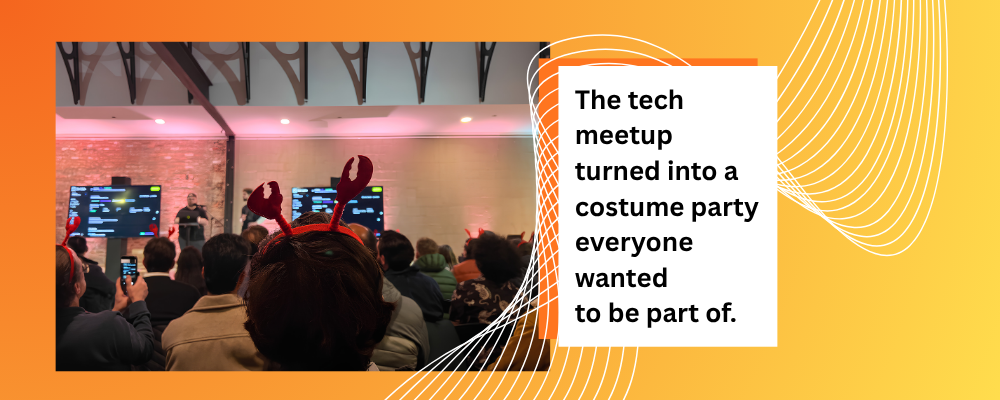
What started as a tech convention to meet other developers actually was more fun for the attendees to wear the lobster headbands that were distributed, and withouth any question asked they wore it. Source: TheVerge
What is OpenClaw and Why Does It Matter?
OpenClaw is an open-source AI assistant platform. It sits in a crowded, fast-moving space — competing not just on features but on belief. Its users aren't just customers. They're people who think AI shouldn't be controlled by a handful of companies.
Why the Lobster?
OpenClaw started as Clawdbot. The name however, was a play on Antrhopic's Claude. Anthropic asked for a rename, obviously. Because during the brainstorming with the Founder and his Discord community- they landed on renaming it as Moltbot- because lobsters molt, they shed their shells to grow. It comes from a metaphor for an open-source project that keeps evolving. But that wasn't enough- and that's how they landed on OpenClaw. But they loved the metaphor so much, the lobster stayed.
ClawCon NYC was OpenClaw's first-ever convention & the Verge covered it.
Hundreds of people packed a Manhatten venus expecting demos, lobster-themed buffets, and having a shared conversation about the future of AI. The host told the crowd something that stuck:
"All your friends and family probably think you're crazy. The whole point is for you to be in a room with other crazy people so it's normal."
That line matters more than any keynote. It told the audience that they're not alone on this. And it gave them permission to lean into it by wearing the headbands.
What Actually happened at ClawCon NYC
OpenClaw didnt' just hand out lobster headbands at registration of the convention. They didn't a run a campaign asking people to wear them. People just showed up in them.
A lot of you may wonder how did this even happen.
When your audience self-identifies around a visual identiy- - when they choose to wear something before anyone asks- that's a category of brand engagement. Its not participation. It's owning up to what they're part of.
The lobster if a recurring symbol in OpenClaw's community. It shows up in the branding, in the humor; it's one of the -injokes that only makes sense if you're paying attention. By the time ClawCon happened, it wasn't a mascot. It was a shorthand insider information already.
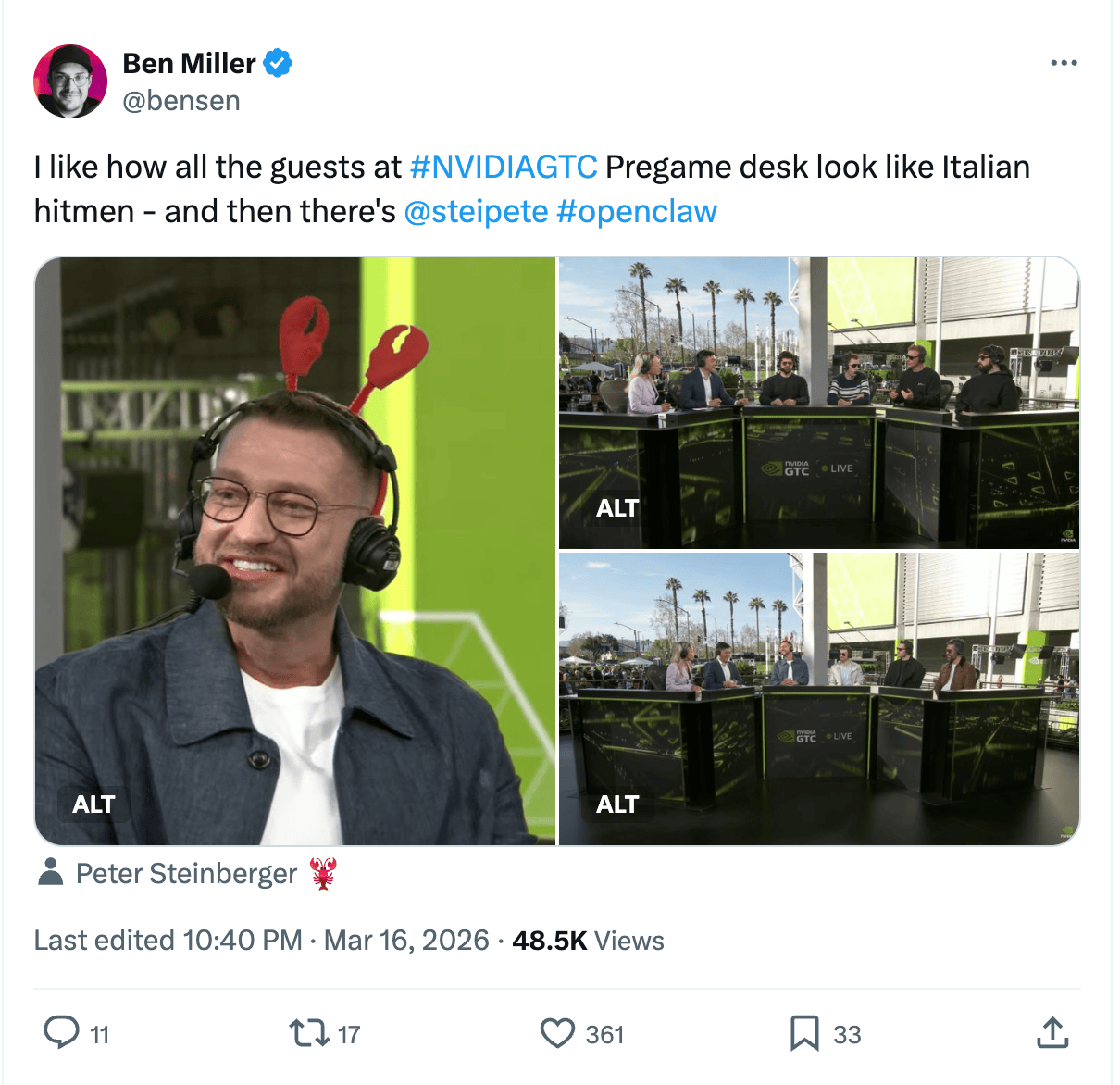
OpenClaw Founder, Peter Steinberger flaunting his lobster headbands at Nvidia GTC 2026 that stood out from everyone else got the conversation running because it looked silly enough for viewers to get curious. Source: x
Why did the Lobster HeadBand Worked when A T shirt wouldn't
Why didn't OpenClaw just do a branded hoodie? Even AI startup gives away hoodies, there's nothing unique or niche about it. Every conference has a tote bag too. People use them, sure, but they don't really go viral for this that makes people go WOW.
The lobster headband on the other hand did these 3 things that a hoodie can't:
It was weird enough to require an explanation
It you spot someone in an OpenClaw Hoodie, you move on. If you see someone in a lobster headband, it makes others stop and ask you. "Why are you wearing that?"That question is the campaign. Every time it gets asked, the person wearing it become s a brand storyteller. They made that as the conversation-starter and the brand is what gets explained.
It was a shared uniform, not an individual swag.
700 people wearing the same absurd thing at the same time createsa curiosity that a single person in a branded t-shirt never can: a moment. When you look at the crowd photos at ClawCon, you don't see a brand but a tribe. That image showed a sea of lobsters is more shareable than any single product shot.

Right outside the ClawCon NYC convention attendees were spotted wearing the lobster headbands- making them stand out from the local pedestrians on the sidewalk. Source: AOL
It was Community-Specific enough to mean something
The lobster isn't a random logo. It comes from inside the culture. Its the kind of reference that makes insiders feel seen and makes outsiders curious.
What brand Managers can learn from this
You don't need a convention or a lobster to make yourself known or unique. But there are three thins that OpenClaw got right that we think are worth copying:
Start with the Bit, not the brand.
OpenClaw didn't put their logo on a headband. They put a lobster on it. The logo didn't need to be there- the community already knew what it meant.
Make it wearable at the moment of peak energy
A convention is the highest-energy moment in any community's calendar since it's has a really good footfall and media coverage. If your audience is going to be doing something silly, they'll do it there where everyone is doing it.Timing matters. If you brought out the same headband handed out at a product launch webinar would have landed differently. OpenClaw gave their community permission to wear at the exact moment they were surrounded by others who'd get the joke.
Let the community carry it
OpenClaw didn't influencers because they didn't need that kinda hashtag campaign. The coverage came because the Verge noticed something genuinely unsual- hundred of people at a grassroots AI convention, self-organising around a symbol.That only happens when the community has already internalized the identity.
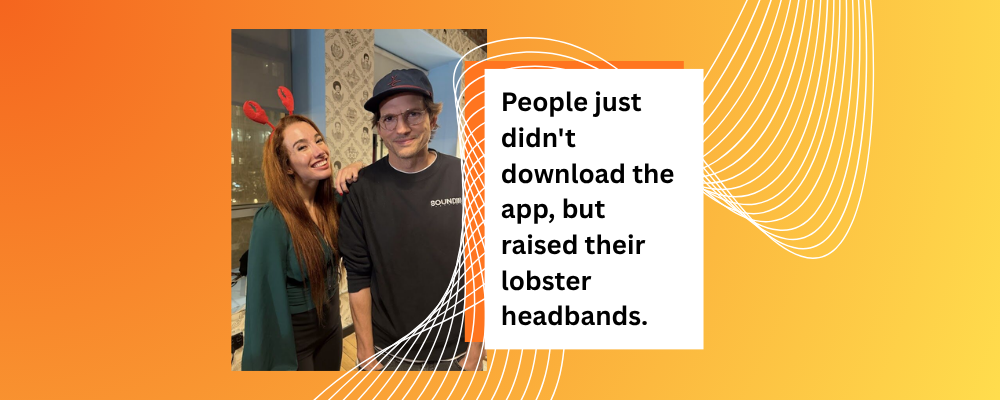
Delia Lazarescu embracing Clawcon’s playful lobster-themed swag—turning merch into part of the experience. Source: LinkedIn
Here's Your Next Move
Most developer recognition programs are digital. A badge in a dashboard. A tier name in an email.
OpenAI made something you can hold, put on your desk, and have a conversation about — and developers were publicly posting their org IDs asking whether they qualified.
For brand managers building for AI and developer audiences: your most committed users are doing invisible things at enormous scale every day. The question isn't whether to recognise that. It's whether you're making the recognition worth talking about.
Other Blogs you may find interesting:-