
Stop! Read This Before You Print Your Next Football Campaign Merchandise
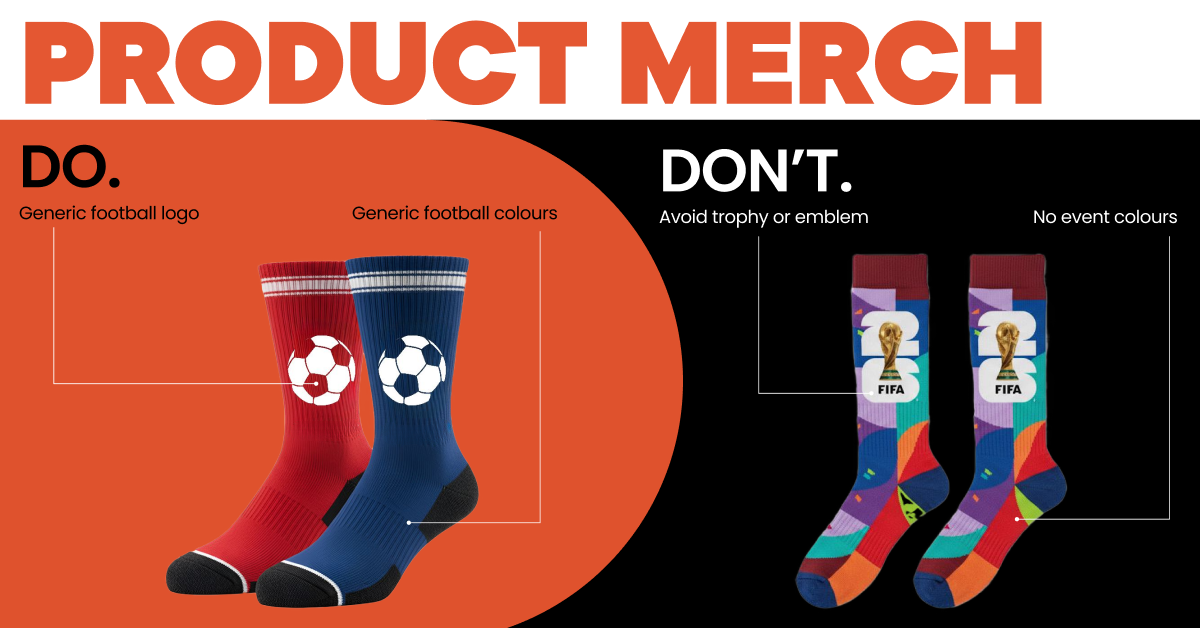
Design football-inspired merch using generic icons and colours. Design example created for educational purposes based on publicly available FIFA World Cup™ Intellectual Property Guidelines. Source: FIFA World Cup Guidelines
Every four years, the World Cup becomes more than a sporting event.
It becomes culture.
Offices host screenings. Communities gather. Social feeds flood with match nights, celebrations, heartbreaks, and last-minute goals.
Naturally, brands want to be part of that moment — through campaigns, engagement kits, internal merchandise, or limited-edition drops.
But this is also where many brands hesitate.
“Are we allowed to do this?”
“Will this get stuck with legal?”
“What if we accidentally violate FIFA rules?”
The good news:
Participating in the World Cup moment is absolutely possible — when you understand where the boundaries are.
This guide walks you through what brands can and can’t do when creating football-season merchandise during the World Cup period. — clearly, practically, and without legal jargon.
Why Compliance Matters During the World Cup
FIFA holds all intellectual property, media, marketing, licensing, ticketing, and commercial rights related to the FIFA World Cup 26™.
These rights are protected globally through trademark, copyright, and related laws.
They exist to:
protect official sponsors and licensees
fund the tournament itself
support global football development programmes
For non-affiliated brands, this means:
You may celebrate the tournament but
You must not appear officially connected to FIFA or the World Cup.
Most issues arise not from intent, but from misunderstanding.
This is why clarity matters early in campaign planning.
The Biggest Misconception Brands Have
Many campaigns start with good intentions — and still run into trouble.
Common assumptions we hear:
“We’re not using logos, so we’re safe.”
“It’s just for employees.”
“Everyone else is doing it anyway.”
Unfortunately, compliance doesn’t work that way.
FIFA protection isn’t only about logos.
Association can be implied, not just stated.
This means:
Words
Visual context
Timing
Design language
…all contribute to how a campaign is interpreted.
If a design strongly suggests official affiliation, even without using logos, it can still raise red flags.
What Is Actually Trademarked (In Simple Terms)
Without getting legal-heavy, here’s a helpful way to think about it:
If it immediately reminds someone of FIFA as an organisation — avoid it.
Typically protected elements include:
Names & Phrases
“FIFA World Cup”
“World Cup 2026”
Official tournament names
Event-specific slogans
Logos & Symbols
FIFA logos
Official emblems
Tournament badges
Trophy & Event Imagery
The official World Cup trophy
Branded mascots
Recognisable event artwork
Event Branding Systems
Official typography styles
Identifiable design systems used by FIFA
Even partial usage or creative reinterpretation can be risky if the association is clear.
What Brands Can Safely Do
Here’s the part many brand managers find relieving.
You can participate — just not through ownership of the event.
Safe approaches include:
Generic football references
Match-day themed merchandise
Celebration-focused messaging
Community and togetherness concepts
Timing-based campaigns tied to the season, not the organiser
Examples of safe language:
“Game Night”
“Kick-Off Season”
“Match Day Energy”
“Let the Games Begin”
When done right, your audience understands the context — without your brand claiming the event.
Design Within Safe Visual Language
Safe visual approaches include:
Abstract football-inspired graphics
Pitch lines, movement patterns, nets (generic)
Celebration cues like confetti, rhythm, motion
Colour palettes used thoughtfully (without national flag mimicry)
A simple internal test many teams use:
“Would this design still make sense even if football didn’t exist as a trademarked event?”
If the answer is yes — you’re usually on safer ground.
Merchandise: What to do & What's Restricted
FIFA guidelines are especially strict when it comes to merchandise.
The use of Official Intellectual Property on **any merchandising item** is an exclusive right of FIFA Rights Holders only.
This applies even if items are:
free
internal
not sold
distributed to employees or customers
If it appears on a physical product and benefits a brand commercially, FIFA IP must not be used.
How Brands Can Celebrate Without Creating Unauthorized Association
FIFA guidelines clearly state that businesses and the public may celebrate the tournament using generic football or country-related elements, as long as they do not incorporate Official Intellectual Property.
This is where compliant strategy begins.
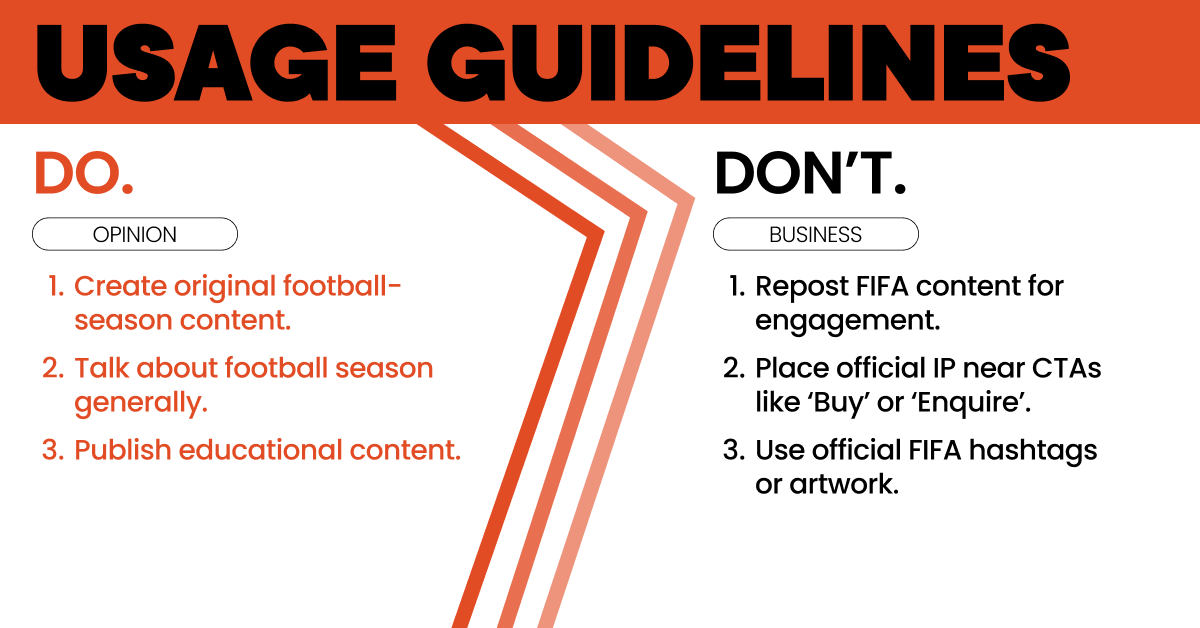
Create original, educational football-season content. Design example created for educational purposes based on publicly available FIFA World Cup™ Intellectual Property Guidelines. Source: FIFA World Cup Guidelines
Social Media: Important for Brand Accounts
FIFA guidelines distinguish clearly between fans and companies.
Fans may post non-commercial content using Official IP
Companies may not use Official IP for commercial benefit
Brand accounts should avoid:
official FIFA hashtags
reposting official content for promotion
using tournament branding for reach or engagement
Original, football-season themed content is the safest route.
Websites, URLs & Digital Campaigns
Brands should not:
include FIFA or World Cup terms in URLs or domain names
name apps, microsites, or tools using official titles
design webpages that visually resemble official FIFA branding
Generic football-themed pages are acceptable — official identifiers are not.
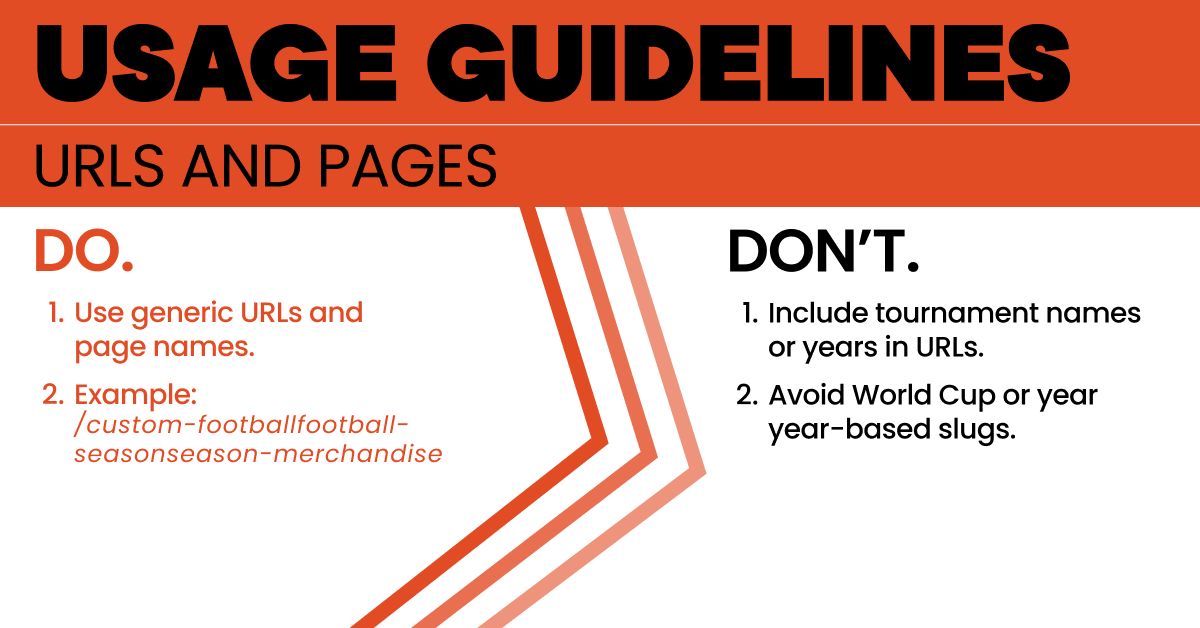
Use generic, season-agnostic URLs and page names. Design example created for educational purposes based on publicly available FIFA World Cup™ Intellectual Property Guidelines. Source: FIFA World Cup Guidelines
Editorial Use vs Commercial Use
Editorial use is allowed when content is:
informational
non-promotional
not advertising a product
not implying endorsement
This includes:
news reporting
commentary
educational articles
However, Official IP must not be:
part of branding
used decoratively
repeated across layouts
placed near commercial messaging
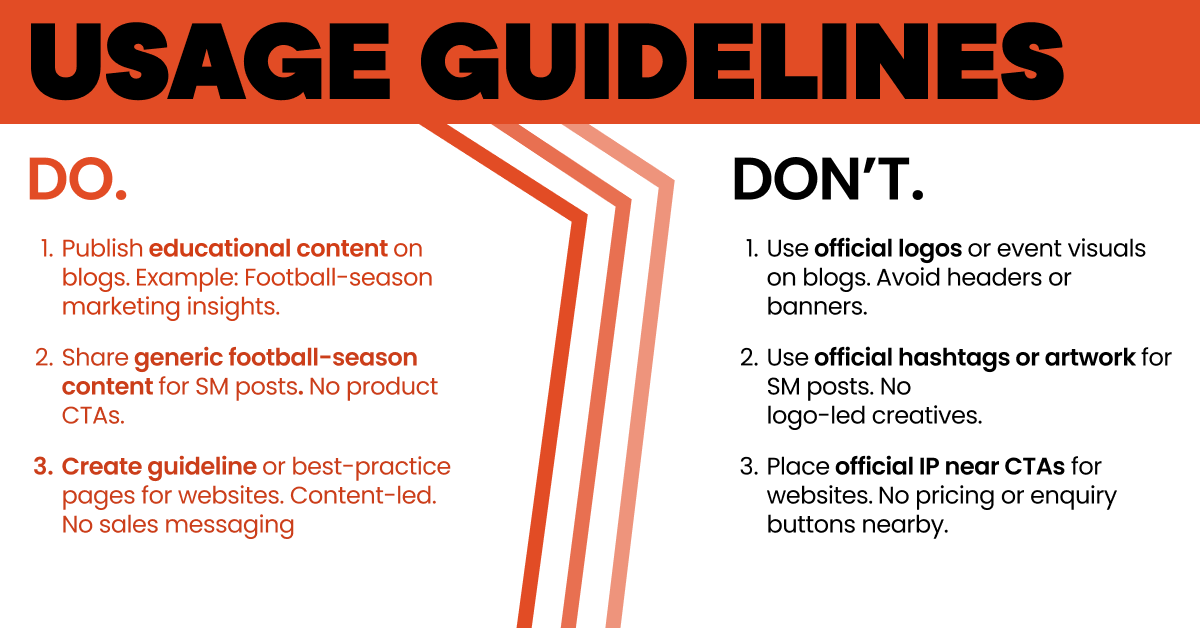
Focus on educational, content-led layouts. Design example created for educational purposes based on publicly available FIFA World Cup™ Intellectual Property Guidelines. Source: FIFA World Cup Guidelines
Why Experienced Merch Partners Matter
Because World Cup merchandise is not just about production.
A responsible merch partner should:
identify risk early
guide compliant design language
offer safe alternatives
reduce internal approval friction
protect the brand’s reputation
The role is not just to supply — but to safeguard.
Final Thought
The FIFA World Cup 26™ is one of the world’s most powerful football moments.
Brands don’t need official sponsorship to be present —
they need understanding, strategy, and respect for intellectual property.
When approached correctly, World Cup merchandise becomes:
confident, not cautious
creative, not risky
memorable, not problematic
That’s how brands participate responsibly — while the world is watching
Disclaimer: Gumtoo is not affiliated with, endorsed by, or officially connected to FIFA or the FIFA World Cup™. All references to FIFA and the tournament are used strictly for informational and educational purposes regarding publicly available intellectual property guidelines.
Other Blogs you may find interesting:-