
22 Employee Engagement Gifts HR Teams Use to Build Culture
Being a great place to work isn’t just about internal culture anymore — it’s about what employees carry into their homes, conversations, and social circles. When someone receives thoughtful, well-designed swag, it doesn’t stay at their desk. It shows up in living rooms, on coffee tables, during game nights, and in everyday routines. That’s when family and friends notice — “Your company gave you this?” — and that’s when employer branding becomes real, memorable, and human. The kind of gifts employees proudly use, display, or talk about become proof points that your company values its people. So much so that when someone considers leaving, the reaction isn’t just internal — it’s external too:
“Why would you quit? They treat you so well.”
Old narrative
“Swag boosts morale and engagement.”
New narrative
“Swag is employer branding that leaves the building.”
This is the angle very few people are owning.
You’re not just gifting employees.
You’re shaping how their families, friends, and peers perceive your company.
Here are 22 employee engagement gift ideas HR managers love using—including practical favorites and high-impact custom merchandise that employees remember.
Signal #1: “You Belong Here”
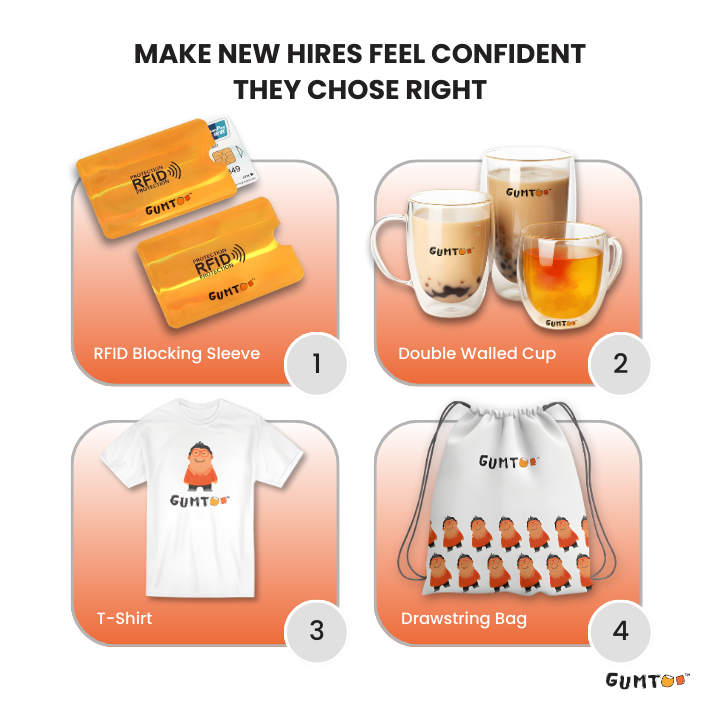
The first days at a new job are critical, especially when onboarding happens remotely. Without a physical office experience, companies need tangible ways to make new hires feel welcomed and included.
To send this signal, organisations often rely on onboarding-focused corporate gifting kits. These typically include branded bags, pens, mugs, desk essentials, or personalised items like blocking cards that help new hires feel part of the team from Day 1. Some companies also include company tshirts—soft, emotionally engaging items that instantly build familiarity and pride.
When these kits are unboxed at home, they’re often seen by family members, quietly reinforcing the message: this is a company that cares about its people.
Signal #2: “Your Effort is seen.”
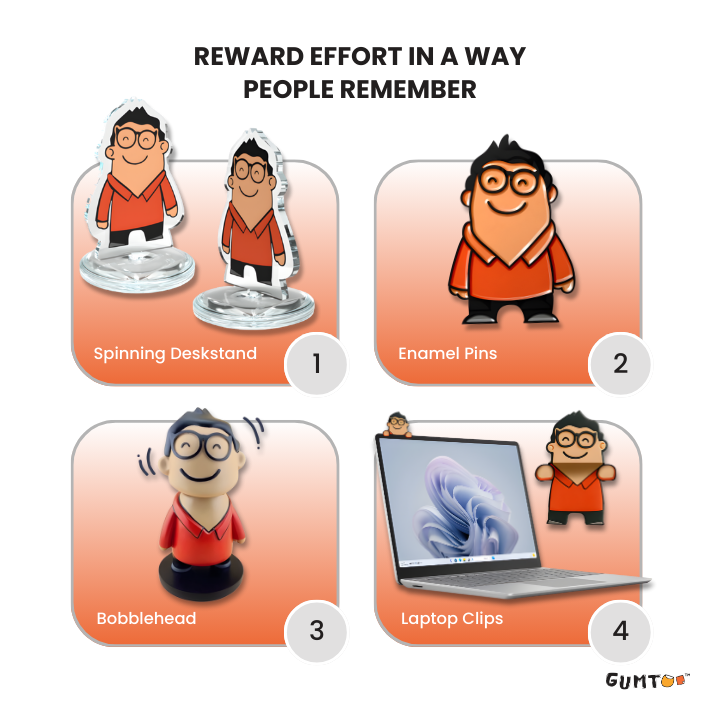
Recognition loses impact when it exists only in emails or dashboards. Physical markers of appreciation create lasting memory and meaning.
HR teams often turn to custom enamel pins to mark milestones like work anniversaries or special contributions. Small and wearable, these pins turn recognition into something employees can display. Others use trophies with custom display cases as an elevated alternative to certificates—especially for quarterly awards or leadership recognition.
For everyday wins, spot recognition gift boxes help acknowledge effort in a timely, personal way. These tangible forms of appreciation make recognition visible, both inside and outside the workplace.
Signal #3: “We’re Human, Not Just Productive”
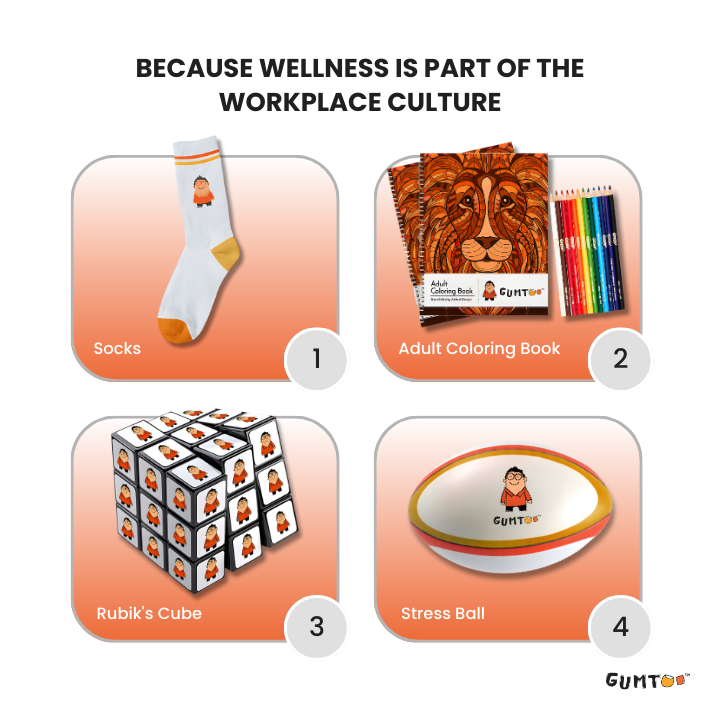
Hybrid work has blurred boundaries between work and personal time. Burnout, screen fatigue, and emotional overload are more common—and more visible—than ever.
To address this, many companies include wellness and recharge kits as part of their employee engagement strategy. These often feature stress-relief tools, creative activities, or calming elements that encourage employees to pause and reset.
Casual items like custom socks or comfort-focused gifts also fall into this category. They’re wearable, shared at home, and used during downtime—moments when work culture is rarely felt but deeply noticed.
Signal #4: “We Support You Wherever You Work”
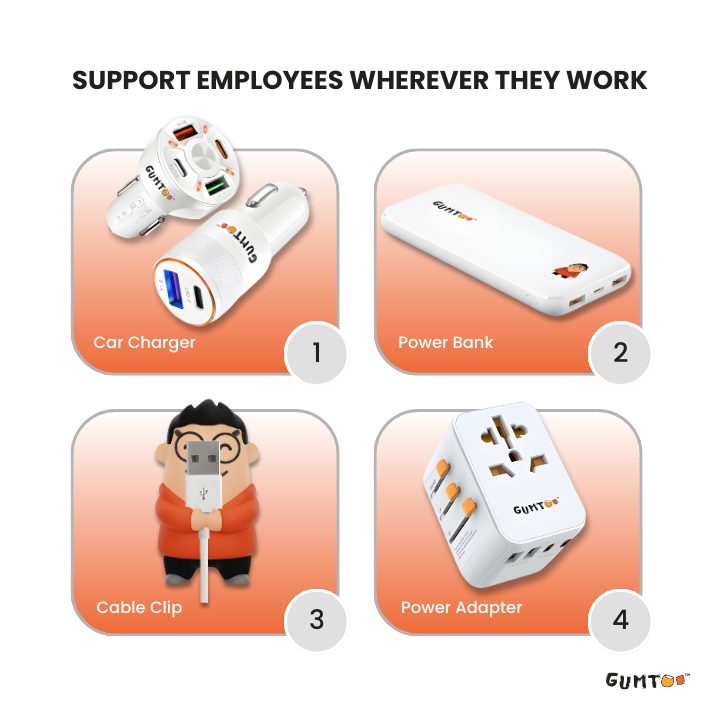
In a hybrid setup, employees move between home, office, and shared workspaces. Consistent support across locations matters.
Work-from-home productivity kits help level that experience. These kits usually include desk and tech essentials that make any workspace functional and familiar. By providing tools like car chargers that travel with employees, companies show that productivity and comfort aren’t tied to a single location.
This signal is subtle but powerful: support is not conditional on presence.
Signal #5: “We Invest in Shared Experiences.”
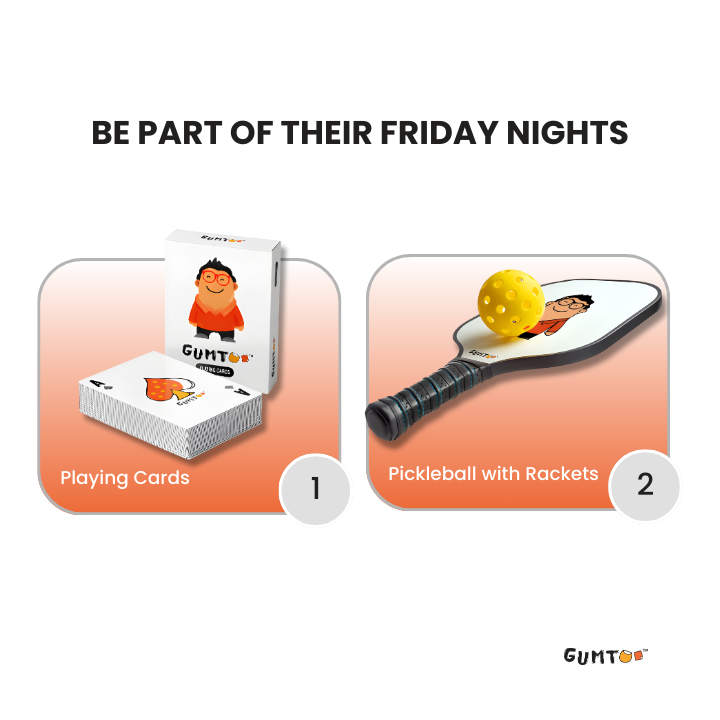
Culture isn’t built only through work—it’s built through moments of connection.
Friday fun or game night kits are often used to encourage teams to unwind and connect beyond daily tasks. Games and activities create shared experiences that employees associate with relaxation, laughter, and balance. Importantly, these kits are often enjoyed with family or friends, extending the company’s presence into positive personal moments.
Signal #6: “You’re Part of Something Long-Term.”
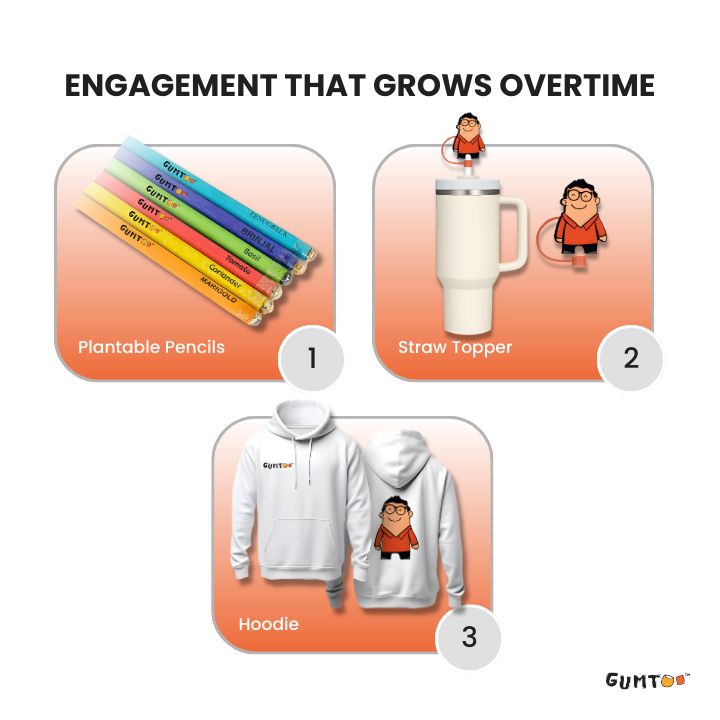
Some of the strongest engagement comes from consistency over time.
Seasonal festive kits—for occasions like Diwali, Christmas, Lunar New Year, or year-end appreciation—help ensure every employee feels included, regardless of where they work. Items like festive drinkware, apparel, or games often become part of home traditions.
Many companies also introduce festive edition plushies or socks, or create limited-edition collectibles released annually. Over time, these items build anticipation and tradition. Employees begin to associate certain moments of the year with how the company shows appreciation.
The Second Audience of Employee Gifting
One aspect of corporate gifting that’s often overlooked is its second audience. Employee gifts are seen by spouses, parents, children, roommates, and friends. They spark conversations and shape perceptions.
When gifts are thoughtful, useful, and emotionally resonant, they become social proof. They quietly answer questions like:
Is this a good place to work?
Do they treat people well?
Is this a company worth staying with?
In that sense, employee engagement gifts don’t just build morale—they build reputation.
Conclusion
In today’s world, culture is no longer confined to office walls. It’s carried home, talked about over dinner, and noticed by the people employees care about most. The right swag doesn’t just make employees feel valued — it makes your company remembered.
Other Blogs you may find interesting:-