
Corporate Gifting Trends in Singapore That’re Here to Stay
Every January, the promotional products industry descends on Las Vegas for the PPAI Expo — the largest trade show of its kind, with over 10,000 distributors, nearly 1,000 exhibitors, and roughly a million square feet of product, activation, and ideas.
It is, effectively, a preview of how brands worldwide will gift, reward, and engage people for the next twelve months.
We went through the floor reports, trend breakdowns, and supplier launches from PPAI 2026 so you don't have to. Then we asked a harder question: which of these trends actually translate to Singapore?
Not all of them do. The US market has its own context — cultural, political, and seasonal. But several of the shifts coming out of PPAI 2026 map almost exactly onto what we're seeing in Singapore's corporate gifting landscape right now. And a few of them are already showing up in the most interesting briefs we've worked on this year.
Here's how the eight biggest trends land locally — with Singapore examples for each one.
Merch is a brand stategy- not a giveaway
The clearest signal from PPAI 2026 wasn't any individual product. It was a change in how companies think about what merchandise is for. The show floor this year was full of brands that had stopped treating gifting as a box to tick and started treating it as a deliberate extension of how they show up in the world. The language had shifted — "giveaway" had become "activation," "swag" had become "brand experience." And the booths drawing the biggest crowds were the ones that reflected this thinking most visibly.
If there was one undeniable trend at the expo above all others, it was this: experiences win. Booths that invited attendees to participate — to customise, to watch their item come to life in real time, to make a choice — consistently drew the longest queues. One apparel supplier ran out of hoodies mid-show because their live heat-press customization station was too popular. A pen brand let attendees direct the decoration themselves. People waited, because when you participate in making something, the end product feels personal in a way a pre-printed item never can. The perceived value goes up the moment the recipient has some hand in it.
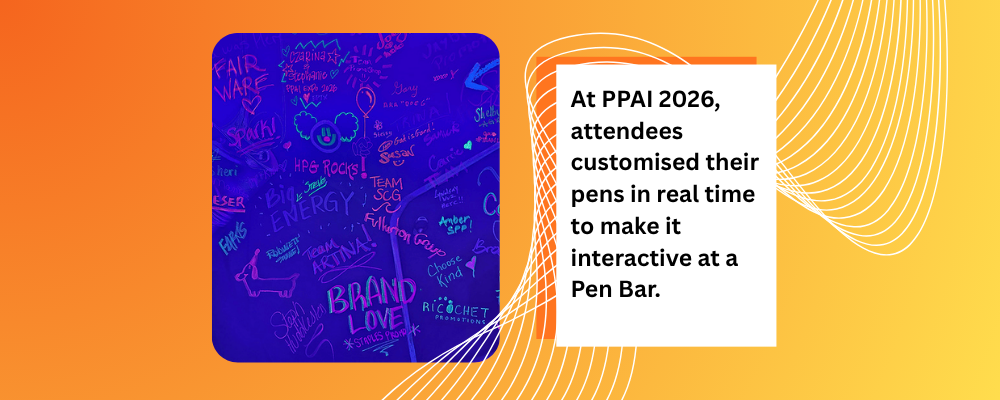
The Pen Bar activation at PPAI 2026 — an interactive station where attendees customised pens in real time. Crowds, personalisation, merch people queued for. Source: ASICentral
In Singapore, this shift is already legible in the brands getting it right. DBS Bank’s annual CNY red packet campaign is one of the clearest local examples. Each year, they commission Singaporean artists to design limited-edition ang baos — turning a functional, disposable item into a collectible that people actively seek out, photograph, and share. The gifting moment becomes a brand moment. The item carries the brand long after the occasion has passed. That’s merch functioning as strategy, not as a line item.
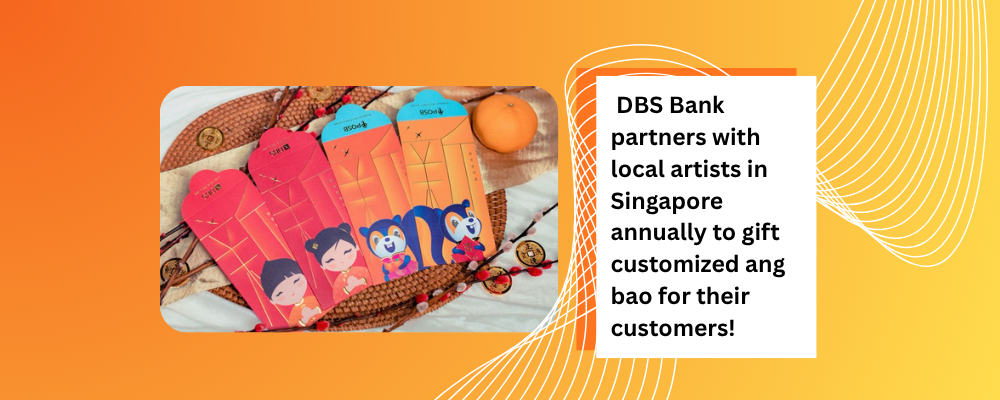
DBS Bank reaches out to local Singaporean artists annual to print out ang boa that they distribute to their customers- this is a great example of being culturally aware to share this event with your customers and staff and retaining them. This is a good corporate gifting. Source: Little Day Out
The same logic applies to any gifting touchpoint — the CNY hamper, the AGM door gift, the client appreciation package. Treated as an afterthought, these moments send one message. Treated as strategy — with considered curation and deliberate presentation — they send a completely different one.
Intentional Design beats a logo slap
At PPAI 2026, one of the most-repeated phrases on the show floor was "designed, not sourced." The brands getting noticed weren't the ones with the biggest logos. They were the ones whose merchandise looked like it had come from a creative director rather than a procurement spreadsheet. Decoration techniques — embroidery, debossing, tonal prints, layered finishes — were being used to elevate the entire product rather than simply mark it. The result was merchandise that looked retail, felt considered, and happened to carry a brand association.
Logo-slapping — dropping a mark onto an off-the-shelf item with no thought for colour, placement, proportion, or finish — is increasingly the thing that makes recipients feel like an afterthought. The item might be perfectly decent. But a logo that fights the product, overwhelms it, or simply sits on it without any design intent signals how much thought went in. People read that signal immediately, even if they couldn't articulate why one item feels considered and another doesn't.
Shopee understood this when they redesigned their new hire welcome kit. Rather than applying the Sea Group logo across a set of generic items, the design team created distinct visual identities for each subsidiary — Shopee, SeaMoney, Foody — so that a Shopee employee received something that said Shopee specifically cares about you, not just that a parent company had organised something. The notebooks displayed company values on the inner cover. The tote bags were designed to be carried in public. The brief started with the employee, not the logo — and the output looked completely different as a result.
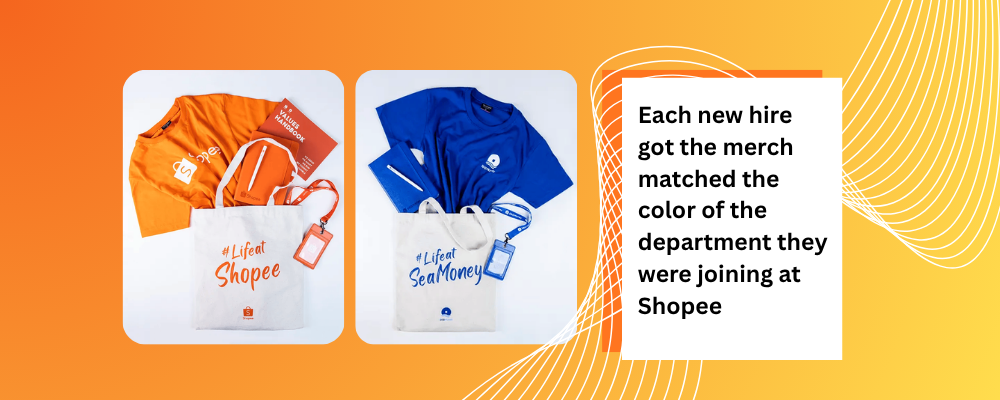
Instead of a uniform Sea Group kit, each subsidiary got its own design language. Custom totes, branded notebooks with values printed inside, merchandise that reflected the specific culture of the team the new hire was joining. Source: Medium
Quality over Quantity
PPAI 2026 had a term for what’s been happening in the gifting industry for the last few years: “staple saturation.” The market is flooded with decent-quality basics — tote bags, tumblers, power banks, notebooks — and giving someone the fourteenth version of the same item now produces diminishing returns that are effectively at zero. The brands getting attention are moving toward fewer, better items: things with genuine material quality, a real story behind them, and enough character to survive the transition from “corporate gift” to “actually mine.”
A useful test for any gifting item: would the recipient keep it if it didn’t have your logo on it? If the honest answer is no — if the logo is the only reason it’s in their hands — then the item is doing marketing, not gifting. The items people genuinely keep are the ones they’d buy for themselves if they found them in a shop. A mug that happens to be exactly the right size. A pen that happens to write better than the one they already have. These earn their place through use, not obligation.
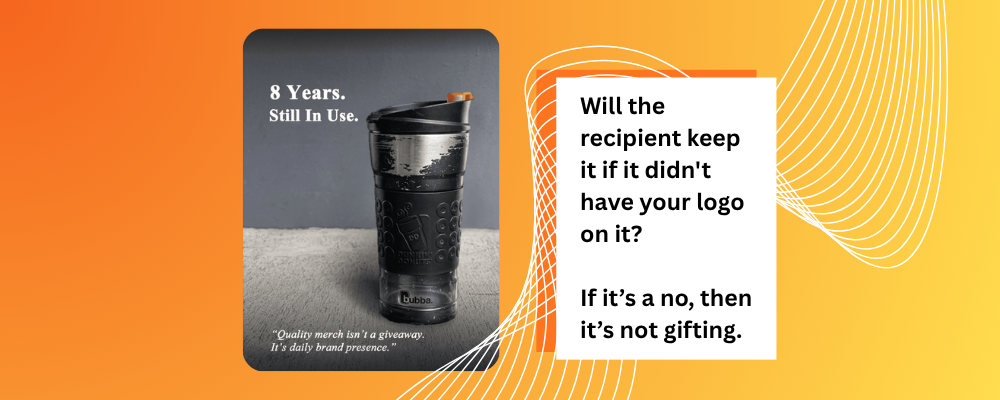
A cup gifted from a friend is a better meaning than one that they buy by themselves. Source: X
Nostalgia and Local References Are an Untapped Opportunityy
The second part of this trend is the one most specific to Singapore, and arguably the most underused opportunity in local corporate gifting: strategic joy. At PPAI 2026, this showed up as nostalgia — custom Legos, retro-format cameras, miniaturised objects, blind box sets. Items designed to make people smile mid-unbox and immediately want to show someone else. The insight behind them is simple: delight is a design outcome, not a happy accident. And when it's executed well, it travels — people tell each other about it.
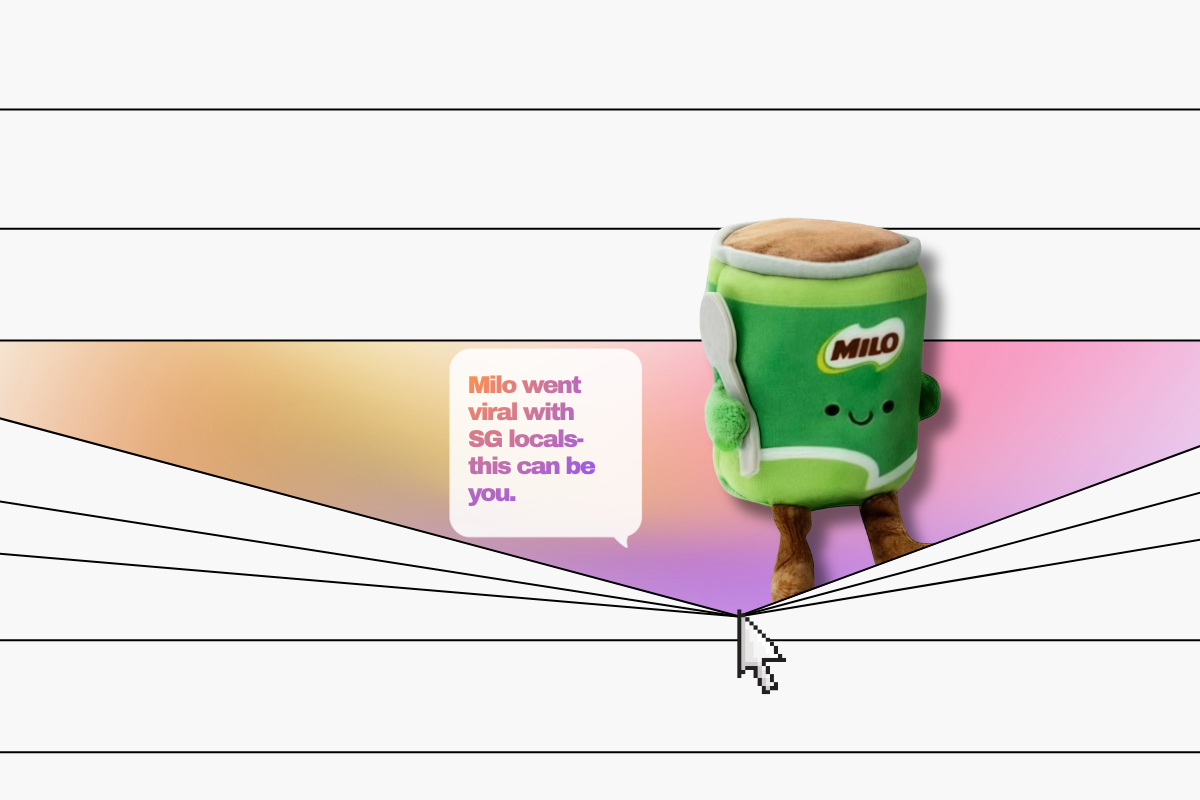
In Singapore, the equivalent of nostalgia is something more specific and more powerful: local cultural references. The foods, icons, and objects that are recognisably, distinctly Singaporean. A custom plush toy that looks like Milo Peng.. A mini-build of kaya toast with soft-boiled eggs. Gem biscuits — those childhood barrel biscuits with the hundreds. These aren't products. They're references. They communicate something a branded tumbler never could: this was made with you in mind. Someone who knows what you grew up eating thought about it when they chose your gift.
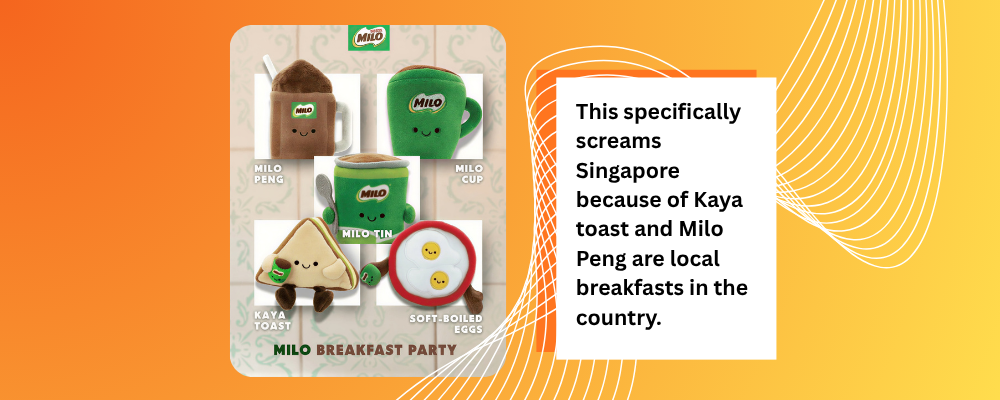
Gifting something more culturally nuanced always go viral for a reason-they’re nostalgic. Source: Instagram
Wellness and sustainability are not table stakes
At PPAI 2026, two categories that were once considered progressive or niche had moved firmly into baseline expectations. Wellness and sustainability were no longer the differentiators in a brief — they were the starting conditions. Brands that weren't thinking about either were the outliers, not the norm.
Wellness
Brands like Therabody and Lululemon showing up in the promotional products space was the clearest signal: wellness gifting has crossed over from lifestyle brands into the mainstream of corporate merchandise. And the most interesting shift isn't in the obvious products — branded gym bags, water bottles, resistance bands. It's in how specific and genuinely useful the best wellness items are becoming.
At the expo, one product that drew significant attention was Calverley's Brick — a small physical device that attaches to a phone and blocks distracting apps, helping people focus or disconnect from screens entirely. It's exactly the kind of item that sits at the intersection of what people actually need and what they'd never buy for themselves. That tension — the gap between what someone knows would help them and what they actually go out and acquire — is where the best gifting happens.
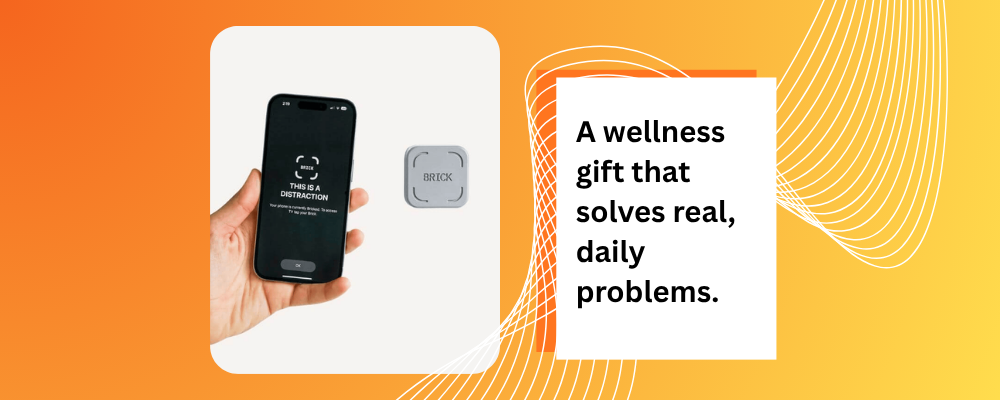
Brik was a unique product that enhanced productivity for individuals from all sectors of life and not just for employees as this can be useful for those studying too. Source: TheEveryGirl
In Singapore, the wellness gifting category is accelerating for a specific reason: the workforce here is overworked, hyper-connected, and increasingly aware of it. A posture corrector for a desk worker who has been hunching over a laptop for three years. A Brick for someone who opens Instagram the moment they put their phone down from a work call. A Calm app subscription for a team that has been running lean for six months. These aren't token gestures. They're acknowledgments of the actual reality of the recipient's day — which is precisely what makes them land differently from a tumbler.
Sustainability
At PPAI 2026, the sustainability conversation had a different quality from previous years. It wasn't being presented as a feature or a differentiator — it was a baseline. Exhibitors weren't showcasing sustainability to stand out. They were demonstrating proof: material origins, recycled percentages, end-of-life plans. The audience had moved past being impressed by the claim and was asking for the evidence.
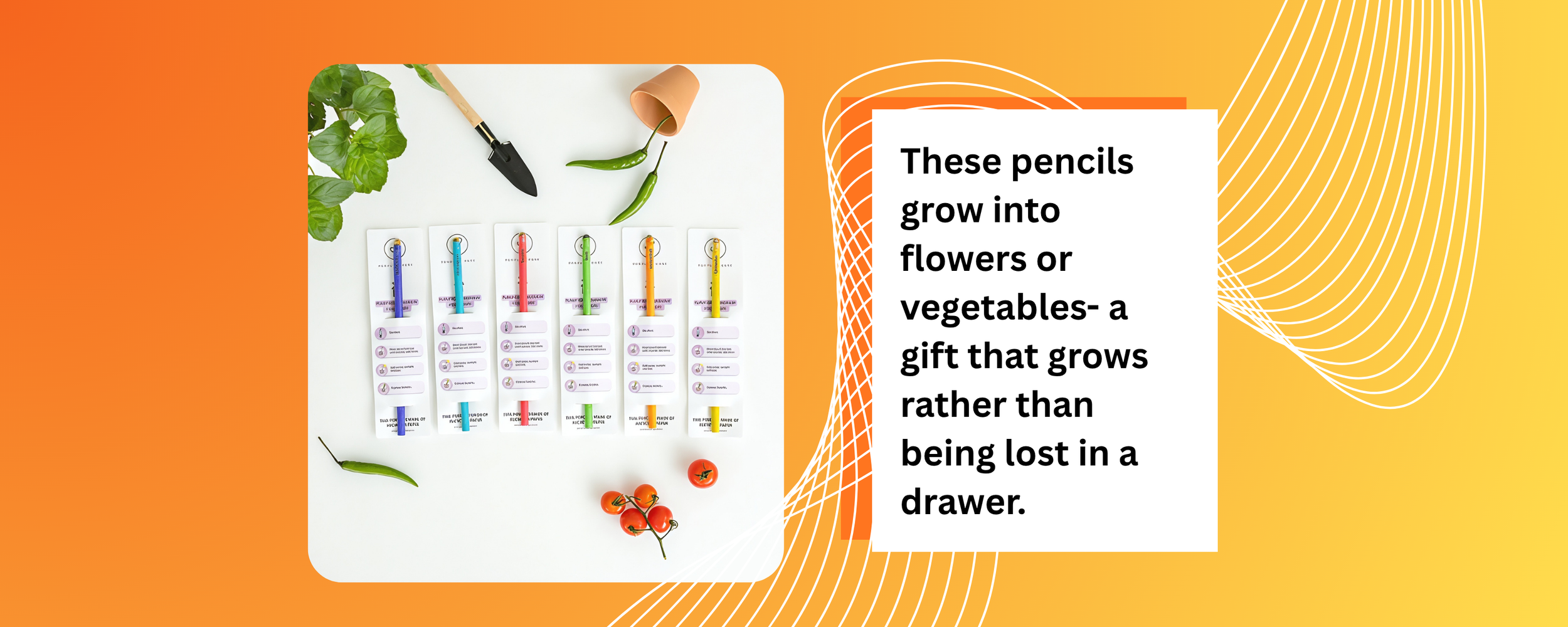
Having pencils that grow once they’re done is a literal forever gift that stays. Source: Green Collective
In Singapore, this shift is being accelerated by the Green Plan 2030 and by a workforce that is increasingly ESG-literate. HR teams are being asked whether the onboarding kit aligns with the company's environmental messaging. The question has moved from "are we doing something sustainable?" to "can we prove it?"
AI is being embedded into merchandise- and it's moving fast
At PPAI 2026, one of the most talked-about product categories was tech-enabled merchandise — items where the technology wasn't just a feature but the entire point. AI translation earbuds. Smart drinkware with hydration tracking. QR-enabled gifts that link to personalized digital experiences. The promotional products industry is working out that in an era where software is everywhere and attention is genuinely scarce, a physical gift with real intelligence embedded in it commands a different kind of notice.
The most compelling example of this category- and the one most relevant to Singapore's tech-forward gifting culture- is the LOOI robot. It's a small desktop device that docks your smartphone and turns into an expressive desk, AI-powered desk companion. Powered by ChatGPT, it holds conversations, recognizes faces and objects, responds to gestures, charges your phone wirelessly and develops a personality that evolves over time based on the interactions it has with it's owner. Sounds like something straight out of a Sci-fi world, isn't it? Think of them as a Tamagotchi for the AI generation- but one that is also genuinely useful as a daily tool.
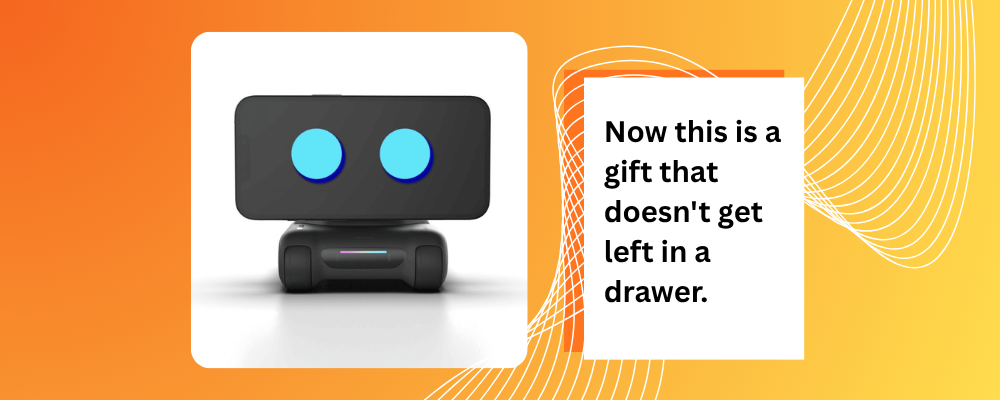
Image an app can help your employees out with their daily rituals- its like having a personal assistant to help through them their tasks of the day. Now that’s a corporate bestie! Source: Youtube
As a corporate gift, LOOI does something that almost nothing else in the gifting category can do: it gets used every day, it creates an ongoing relationship, and it keeps the brand memory alive not through a logo but through an experience that compounds over time.
Here's What You Should Do Next
These five trends aren't predictions. They're already happening — in the briefs coming through, in the conversations at client meetings, in the LinkedIn posts that get shared when a gifting moment lands unusually well. The companies getting ahead of them in Singapore aren't necessarily the ones with the biggest budgets. They're the ones that started the conversation earlier and asked better questions.
The practical starting point is simpler than it sounds. Before any brief goes to a supplier, ask three things: Does this item reflect an actual insight about the person receiving it — or does it just have a large enough branding surface? Does the way it's being presented match the thought that went into choosing it?

Other Blogs you may find interesting:-